Welcome to Work of Scott Horton
Embracing both traditional techniques and cutting-edge technology, Scott Horton strives to capture the essence of nature, modern life, and ancient cultures. He invites you to explore his work and connect with the stories and emotions woven into each piece.
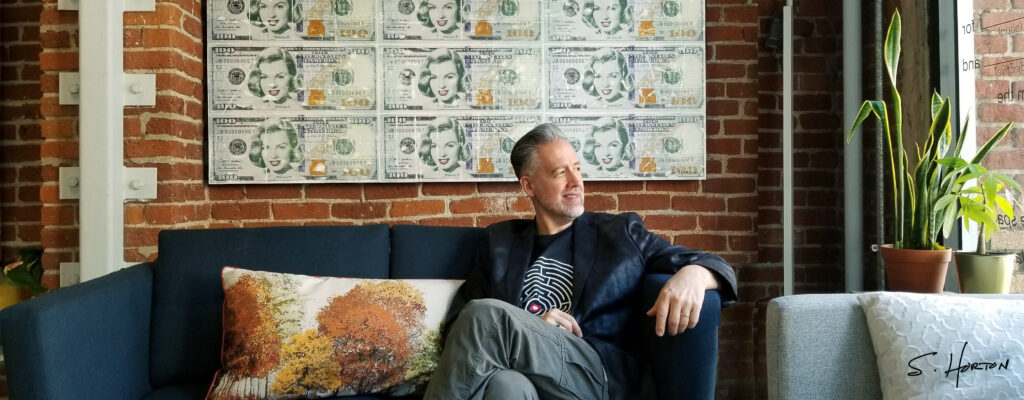
My Early Life and Inspirations
Scott Horton grew up in the Pacific Northwest; living in Seattle while often visiting family in the farmlands of Eastern Washington. He was fortunate to experience both city life as well as farm life, while being surrounded by the incredible beauty of (then) mostly undeveloped and undisturbed landscapes.
His grandmother was Native American, descended from the Yakama Nation. His father also worked for a number of indigenous tribes, occasionally bringing him to tribal gatherings such as pow wows. This exposed Horton to his ancient and indigenous cultural roots.
After high school, Horton moved to middle Georgia, working and going to college. It was there he took art classes, and learned to cultivate his interests in drawing, painting, mixed media and sculpture. With a 40-year background in design, he leverages technology to propel his aspirations in creating his art.
After college, Horton moved back to Seattle and pursued his career in technology and art. He was fortunate to have a large studio to work in, and exhibited in several art shows.
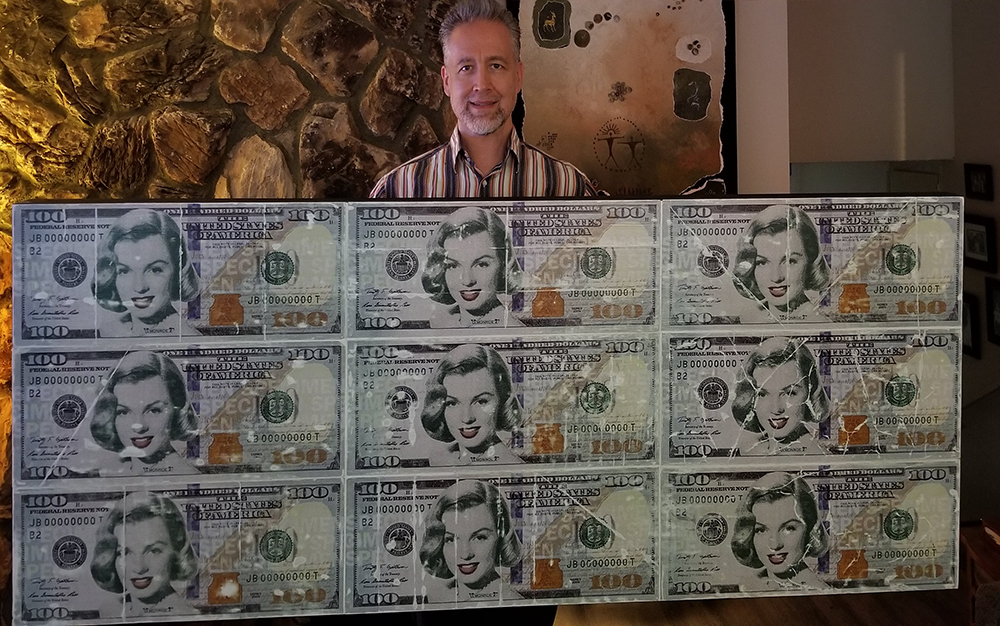
When Horton moved to Los Angeles 30 years ago (where he still resides), he was quickly immersed in a sprawling, urban environment filled with modern (pop) culture and modern art. This led him to explore new ideas and new concepts that have culminated into a fusion between street art and iconic culture.
My Artistic Influences
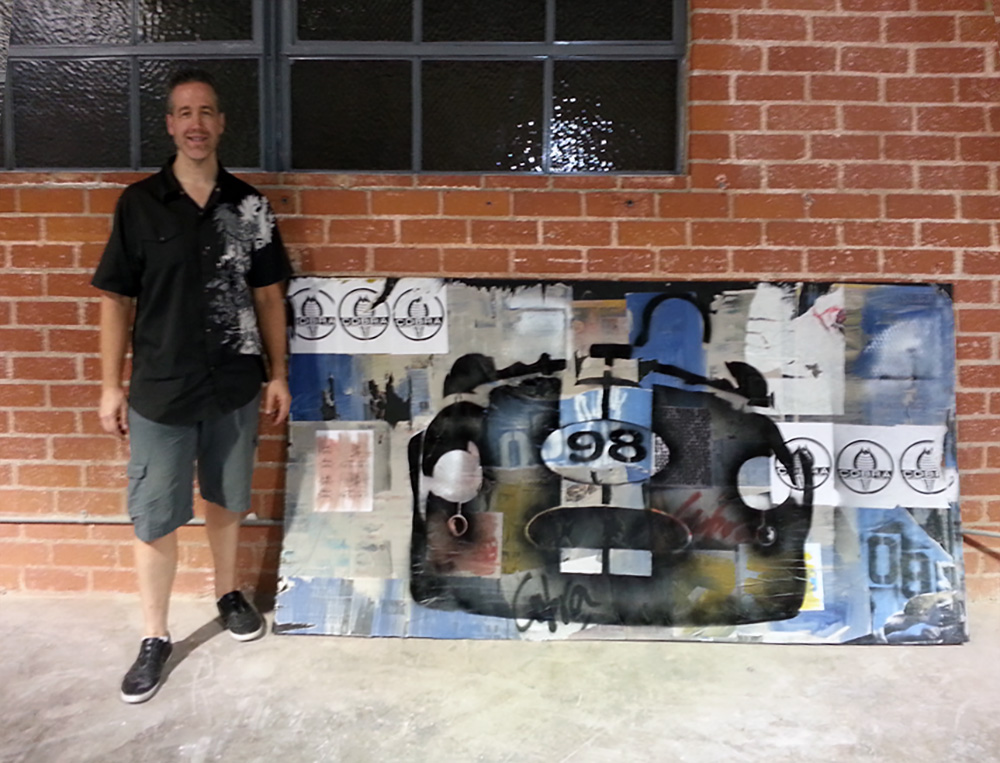
Horton’s (more traditional) work is heavily influenced by artists like Claude Monet, Vincent Van Gogh, and Wassily Kandinsky. And his “Dreamcatchers” series is influenced by the works of René Magritte, Salvador Dali and M.C. Escher.
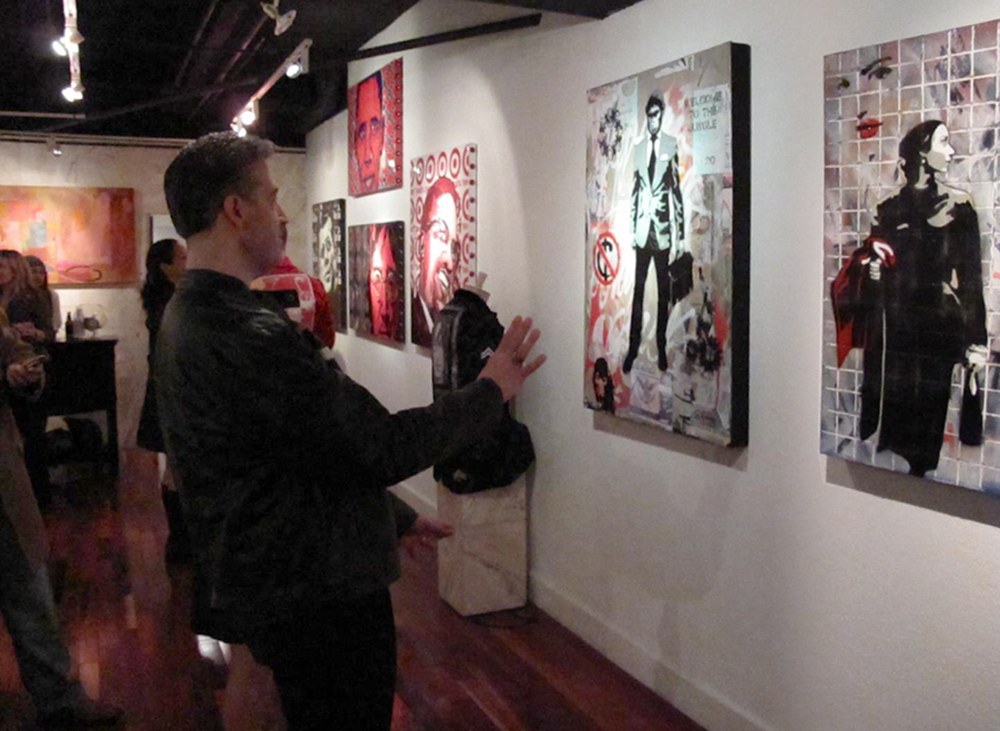
Horton also loves pop culture and street art: Roy Lichtenstein, Robert Rauschenberg, Andy Warhol, Jean-Michel Basquiat and even street artists like Banksy and Mr. Brainwash are all inspirations. In fact, one gallerist where Horton was showing coined the phrase, “Street Pop” when talking about his work because of how he combines street art with pop icons.
Of course, ancient indigenous art is a prime influence for his “Origins” series. While attending a Communications class at the same time as an Art History class, Horton began to see how ancient symbols formed the basis of communication; the cornerstone of understanding and expressing the world around us. A prehistoric cave painting sparked a lifelong journey to highlight the stories depicted in ancient symbols.
Evolution and Continued Journey
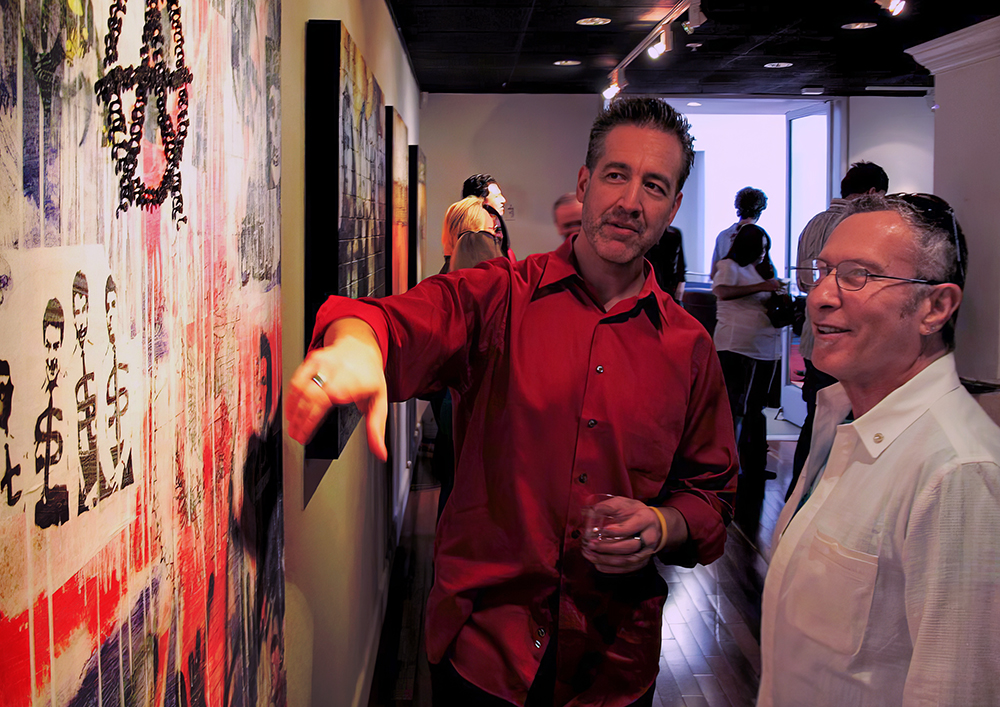
Over the years, Horton’s artistic journey has led him through various art media and styles. He began with drawing and simple painting, gradually expanding into different media such as watercolor, oils, acrylics, illustrative board and printmaking; even sculpture and jewelry.
As much as he has worked (separately) in each medium, Horton started to bring them together to form new work. Over time he added paints and textures into the mixed media pieces he creates. Horton then incorporates other materials to create more textured and sculptural elements in his works.
“Street Pop”
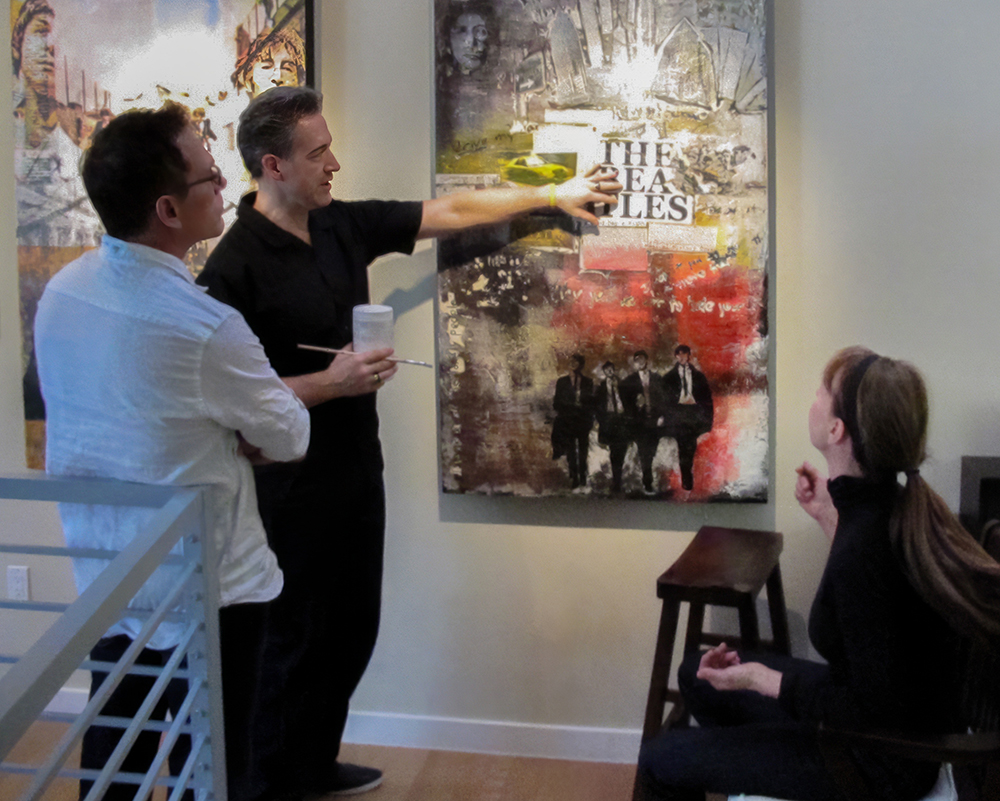
Graffiti, murals, stencil art, and posters in public spaces have been a longstanding muse for Horton’s work. He appreciates how it often addresses social and political issues with raw authenticity. And Pop art attracts him with its bold colors and recognizable imagery from popular culture, like advertising and comic books. Horton admires how it has become a critique of consumerism and mass production.
Horton has stated that, ”Just as we seek to make sense of the information and urban decay that surrounds us, these works embody our desire to ‘create order out of chaos.’”
“Dreamcatchers”
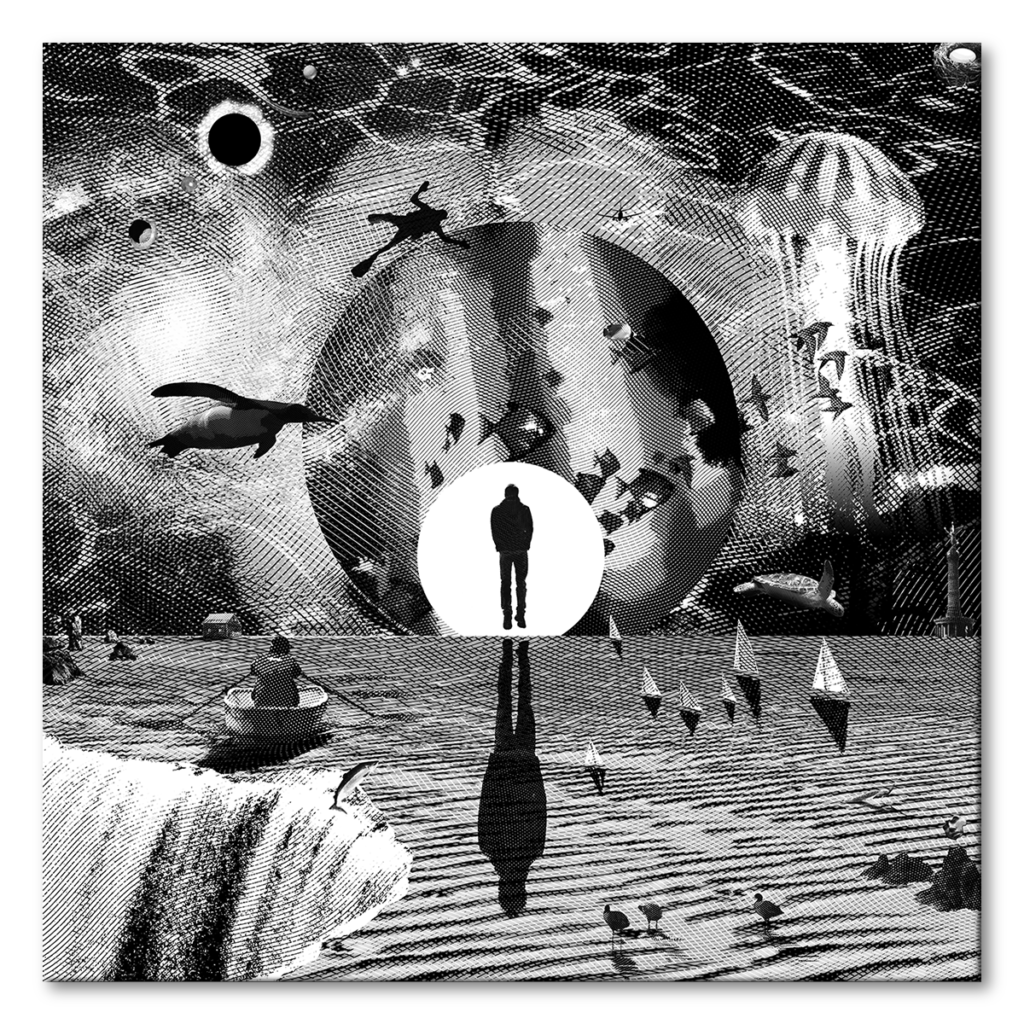
As a teenager, Horton spent a lot of time drawing surrealistic scenes. He was introduced to illustrative boards (or scratchboard) in a general art class, and was so enamored by it, he made an entire series of surrealist scratchboard pieces in black and white he named, “Windows”. Each piece is segmented into smaller vignettes, like windows into other worlds. Horton remarked it was rewarding, but extremely time-intensive.
Through three decades of using photo editing and graphic design software, he developed a digital process to create larger pieces that had the same look as traditional printmaking. Taking a queue from Native American culture, he named the series, “Dreamcatchers,” expressing surrealism as a dream state; a subconscious “window” to the soul.
The works themselves are based on the mathematical principle of the “Golden Ratio”, using intersecting lines (only during the creation process), objects are placed together to draw your eye around the surrealistic environment. Each piece contains approximately 80-100 layers of images and backgrounds blended together to form what you see. They are purposely created in black and white, initially to mimic a traditional printmaking style, but – more importantly – allowing the viewer to determine what is sky, land, or water.
Each limited edition giclee is 48” square. Horton found this was large enough to fully engage the viewer in the environment while also providing him opportunities to place objects – some a fraction of an inch in size – throughout the works. The viewer could spend hours searching through each piece; perpetuating a waking dream state.
“Origins”
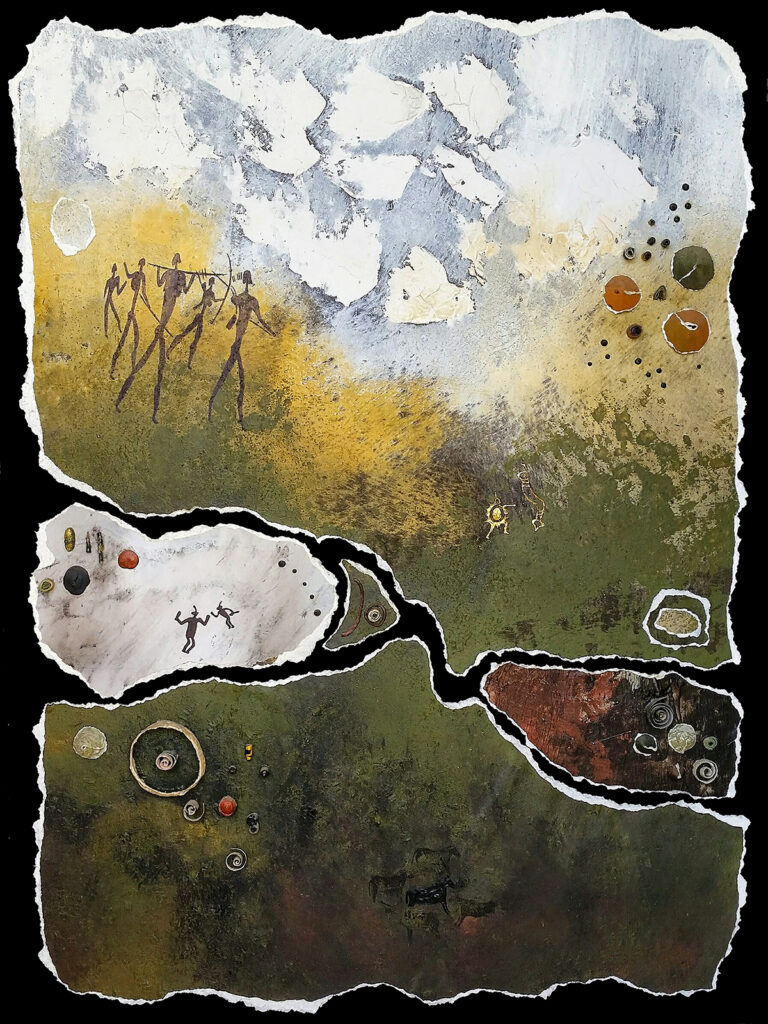
Growing up Horton visited a number of Native American sites in the Pacific Northwest that contained pictograms (cave paintings) and petroglyphs (rock carvings). While taking an Art History class in college he saw a 15,000-year-old painting of a group of warriors, found in a cave in Spain. Horton noticed there were similarities across cultures in how prehistoric artists depicted their environment, and how they expressed their world.
Horton wanted to replicate these symbols on surfaces that also resemble the cave or rock on which they were carved or painted. So he developed a painting and texturing technique that mimicks stone, and infuses it with giant rolls of art paper. Horton paints, textures, and then hand-rips these large “backgrounds” into smaller pieces, arranging them to appear as a rock wall; later into whole landscapes.
In order to accurately represent the ancient artwork, Horton created carved reliefs that he used to “print” images onto the textured surfaces. He adds more texture and even gold leaf to become sculptural reliefs that stand out against the backdrop of the surface.
As you look at an “Origins” piece, you can see three unique perspectives: 1) overlooking a geographic location from above; 2) looking eye-level at the paintings or carvings, and; 3) looking up, as if to the sky. Each perspective represents how the prehistoric artist viewed their world and interrupted what they saw and experienced.
Digital Art and Beyond
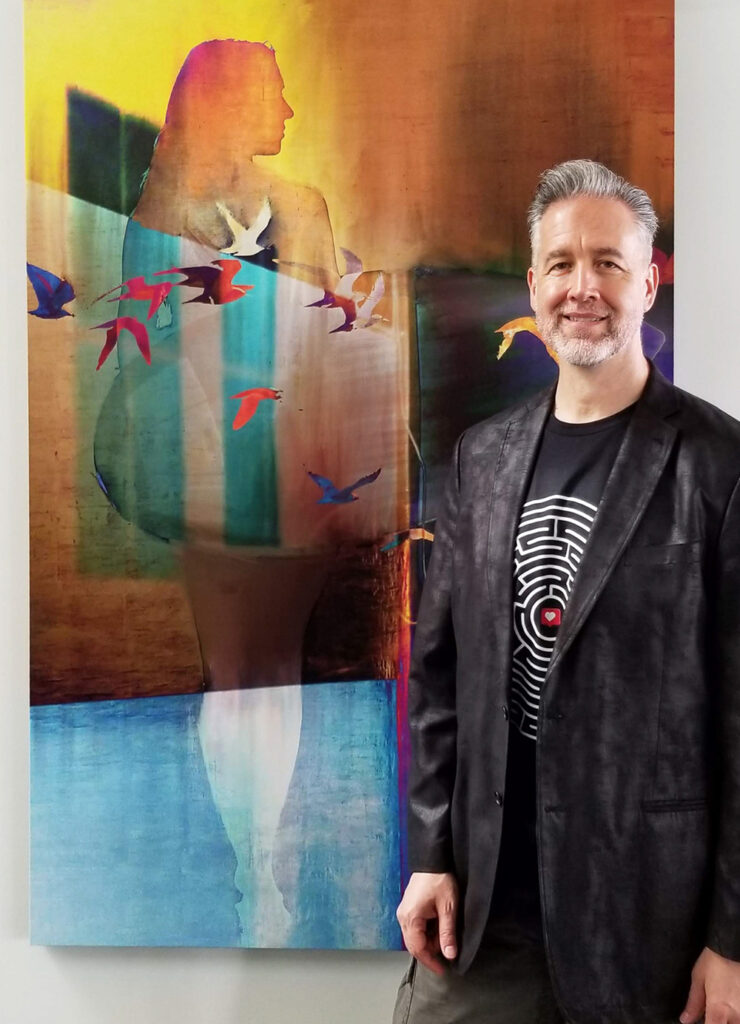
In the last 10 years Horton delved into the world of digital art. Since he was constantly creating digital mockups to execute his concepts into physical art, it was a natural progression to use the tools to create purely digital works. Horton combined digital photography, digital drawing and painting, and manipulates layered elements to form unique, colorful works.
As a continual desire to bring his art to the world, Horton has also created a YouTube channel that showcases 30-minute volumes of his AI-variant works; each video containing nearly 150 images. He hopes to introduce art to new audiences, transforming their phones and smart televisions into a personal art gallery with artwork on display.
Horton is constantly striving to challenge himself and explore new frontiers in art. This is the evolution and continuation of his journey to manifest the dreams, visions, and reflections of his world.
Exhibitions and Recognitions
Scott Horton’s work has been showcased along the West Coast, from Seattle to Los Angeles over the years, with a presence at Art Basel Miami in previous events. The Jeanie Madsen Gallery in Santa Monica became the semi-permanent home for his work, showing and selling many pieces. “Dreamcatchers” works were also part of a “Black & White” group show at BG Gallery (also in Santa Monica). Horton has also exhibited in a number of pop-up style shows.
Looking Ahead
As an artist I’m excited about the future and the endless possibilities it brings. My commitment to pushing the boundaries of my creativity remains steadfast, and I look forward to sharing my journey with you.